

Why this product page gives you more useful information
A strong fashion Product Page should make the buying decision easier before it tries to make the page look impressive. This AURA page starts with large product imagery, clear price information, colour and size controls, live stock, an Add to Bag action and optional Live Try On where the garment supports it. The lower sections add fit, material, care, shipping, returns, a product film, a practical FAQ and a longer styling guide. The result is a page that supports both fast shoppers and careful shoppers without forcing everyone through the same amount of reading.
The primary keyword focus for this example is blazer fit online, supported by online fashion product page, Virtual Try On blazer, tailored set online, fashion size guide and browser based Virtual Try On. These phrases appear only where they help explain the product and shopping process. A product description should sound like a useful fashion specialist, not like a list of search terms.
Start with the silhouette
When you look at tailoring online, begin with shape rather than size. The shoulder line tells you whether the design is sharp, natural or intentionally relaxed. The lapel changes how much visual weight sits near the chest. The jacket length changes the proportion between the torso and leg. The trouser rise and width influence whether the set feels formal, relaxed or graphic. Product photography should show these relationships from more than one angle so you can judge the whole line rather than one flattering pose.
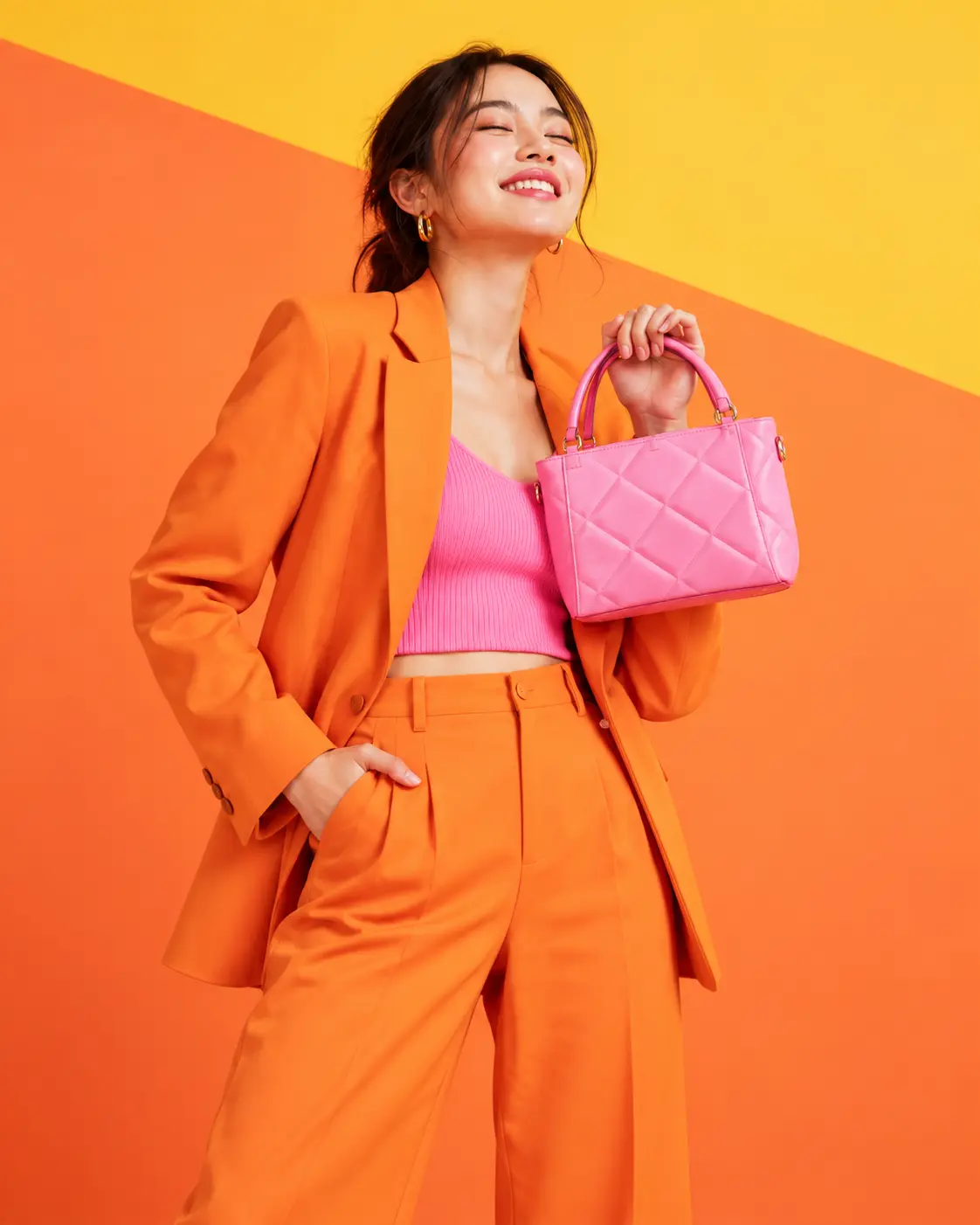
AURA uses consistent campaign styling to make those comparisons easier. The backgrounds are bright, but the product remains the main subject. Large rounded image frames, strong colour fields and repeated lighting create a recognisable visual language across products. This consistency matters because mixed photography can make two items appear more different than they really are.
Use measurements and ease together
Labelled size is only the beginning. Two blazers marked M can have different shoulders, chest measurements and lengths. The more useful question is how the garment measurement compares with your body and with a similar piece you already enjoy wearing. The difference between your body measurement and the garment measurement is ease. A relaxed blazer needs more ease than a close tailored blazer. A knit set behaves differently again because the fabric stretches and falls.
If you are between sizes, do not automatically choose the larger one. Read the intended fit note first. If the product is designed to be relaxed and the shoulders are already broad, sizing up may create more volume than you want. If you plan to layer a sweater underneath, additional room may be useful. The Product Page should explain the intended line so the size choice has context.
What Live Try On can show you
AURA Live Try On is built as a visual aid. When the camera opens, the garment does not immediately appear as a fixed image in the centre of the screen. The browser waits for a usable upper body pose. Once shoulders and hips can be identified with enough confidence, the overlay appears and follows the body. Shoulder width helps control scale. Shoulder angle helps control rotation. The torso position helps control vertical placement. Smoothing reduces small frame to frame movement so the garment feels attached to the person rather than vibrating independently.
This can help you compare colour and overall proportion. It may help answer questions such as whether the jacket feels visually long on your body, whether a bright colour suits the way you want to present yourself, and whether the balance between top and trouser looks right. It does not simulate fabric physics, exact sleeve drape or true garment tension. AURA therefore keeps fit notes and measurements beside the camera feature instead of treating the camera as a replacement for sizing information.
Material changes how a garment behaves
Fabric composition affects the way a product looks in motion and the way it responds after wear. A recycled polyester and viscose blend can hold a clean line while still feeling softer than a rigid woven cloth. A small amount of elastane adds movement. Cotton can create a drier hand feel and may crease more naturally. Knit structures can stretch and recover in ways that woven tailoring cannot. The material line on the Product Page is not decoration. It is part of the fit decision.
Care instructions matter for the same reason. A product that needs dry cleaning may be appropriate for a special tailored piece but less practical for a weekly work uniform. A gentle wash and air dry routine is easier to maintain. Before buying, think about how often you expect to wear the item and whether its care requirements match that use.
Colour can do the work for you
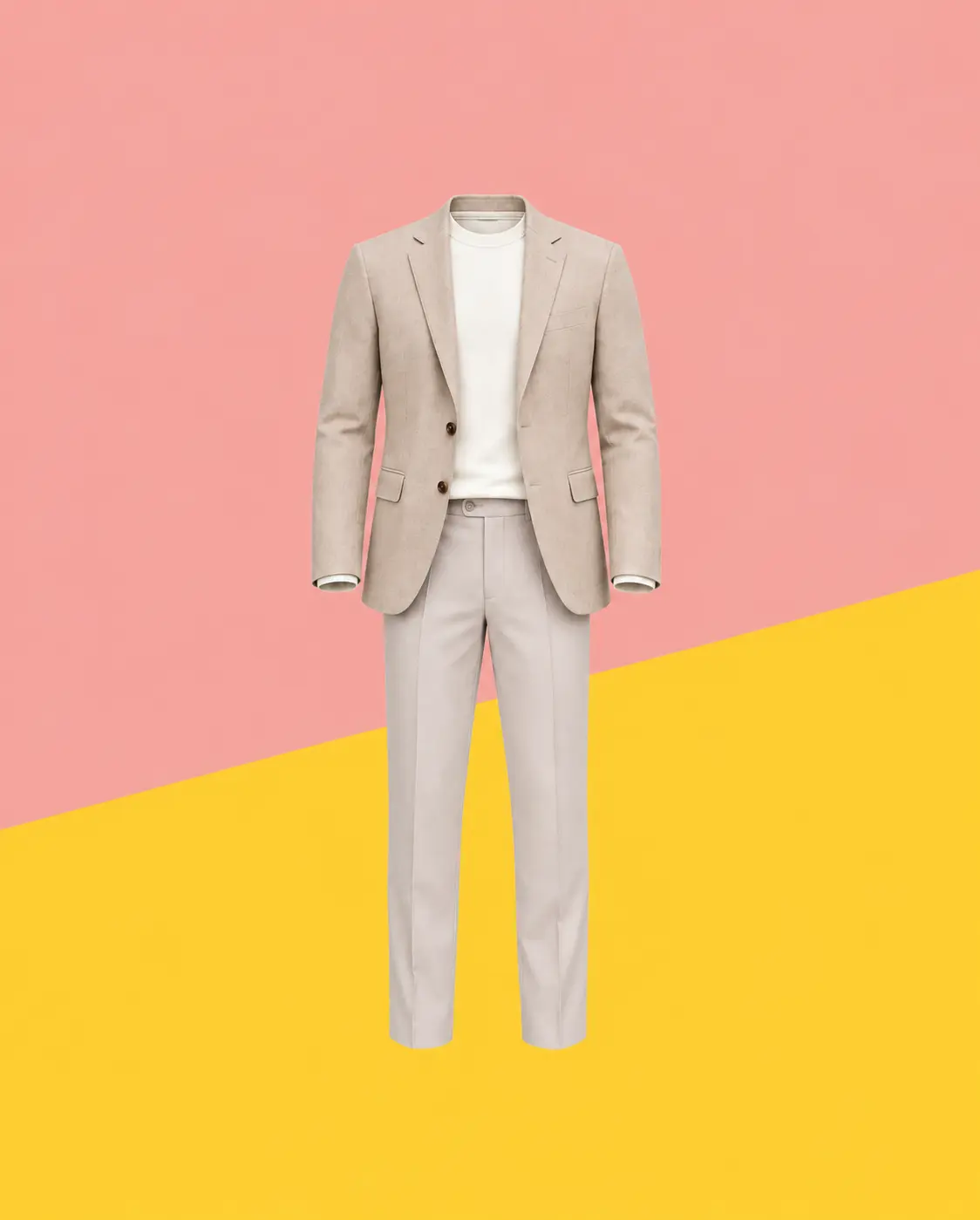
One strong colour can make a simple silhouette feel intentional. In the AURA campaign, orange, pink, cobalt blue and yellow appear as clear blocks rather than small decorative accents. The same approach can work in a wardrobe. A coral blazer set can be the statement, while accessories remain quiet. A sand blazer can create structure without competing with brighter shoes or a bag. Cobalt can shift a familiar knit shape into something more energetic.
Virtual Try On can be especially useful for colour near the face because the live camera gives you a familiar reference: your own skin tone, hair and surroundings. Lighting still changes colour, so the preview should be treated as directional. Product images photographed under controlled studio light remain the better source for the exact colour of the item.
Shipping, returns and trust should be visible before payment
A shopper should not need to reach checkout before learning the basic delivery and return conditions. AURA shows shipping and return guidance directly on the Product Page. Stock is visible before the Add to Bag action. The FAQ explains practical concerns in plain language. The return window and product condition requirements are linked again from the cart and checkout. Trust comes from information that is easy to find, not from a row of generic badges.
How to style the piece
For a sand tailoring set, keep the styling logic simple. Wear the complete set when you want one continuous line. Break the blazer away from the trouser when you want more contrast. A white or cream top keeps the palette soft. Cobalt shoes or an orange accessory add a deliberate colour point. If the blazer is relaxed, a cleaner shoe shape can balance the volume. If the trousers are wide, keep the top line defined enough that the overall silhouette still feels intentional.
For a coral or cobalt set, allow the colour to carry more of the visual message. Neutral accessories make the outfit easier to repeat. If you want a stronger campaign look, echo one colour in a small accessory rather than adding several new competing tones.
Before you add to bag
Check four things. First, confirm your size using the fit note and a comparable garment measurement. Second, confirm that the selected colour is the one shown in the product image or live view. Third, read the material and care information so the garment fits your routine as well as your body. Fourth, review stock, shipping and the return window. If the product supports Live Try On, use it as a final visual check. When those pieces of evidence agree, the decision is much stronger than relying on one product photo alone.